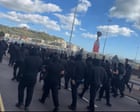
Far-Right Activists Gather at Portsmouth Port Following Migrant Boat Interception

Far-Right Protesters Portsmouth: Major Demonstration at Coastal Port
A significant mobilization of far-right activists has taken place at Portsmouth following the interception of a small vessel carrying 140 asylum seekers destined for the English coast. The arrival of the boat prompted an extensive emergency response, with maritime authorities deploying helicopter support, aircraft surveillance, and multiple lifeboats to manage the situation. This incident marks a notable escalation in tensions surrounding migrant arrivals and border control procedures.
The Vessel Interception and Response Operation
The small boat's approach toward Portsmouth triggered a coordinated rescue and interception operation. Maritime authorities mobilized substantial resources to address the situation, reflecting the scale and complexity of managing such arrivals. The vessel carried approximately 140 individuals seeking asylum, making it a significant maritime incident for the region. The response operation highlighted the logistical challenges faced by authorities when handling multiple asylum seekers arriving simultaneously through maritime routes.
Unprecedented Protest Organization
The gathering of far-right activists at Portsmouth represents an unprecedented moment in terms of scale and coordination. This marks the first documented instance of such a large organized group attempting to obstruct the processing of newly arrived asylum seekers in the port city. The demonstration reflects broader tensions and controversies surrounding immigration policy and border management in the United Kingdom. The timing and organization of the protest suggest deliberate coordination among activist networks.
Social Media Amplification of the Demonstration
Influencers and online activists played a central role in mobilizing participants for the Portsmouth protest. Digital platforms were utilized to broadcast the event live, amplifying its reach beyond those physically present at the port. Livestreaming content included explicit calls for individuals to travel to Portsmouth and block coaches transporting asylum seekers away from processing facilities. This use of social media represents a tactical shift in how anti-migrant activism is organized and promoted, leveraging digital networks to rapidly mobilize supporters across regions.
Blocking Coaches: The Protest Strategy
The primary objective of the assembled protesters centered on obstructing the movement of coaches carrying newly arrived asylum seekers. By attempting to physically block coach departures from the port, activists aimed to disrupt the standard processing procedures and draw attention to their cause. This direct action strategy represents an escalation from previous forms of protest and demonstrates growing willingness to engage in confrontational tactics against migration processing operations. The blockade approach was promoted extensively through influencer channels before and during the demonstration.
Historical Context and Significance
The convergence of far-right protesters at Portsmouth following this boat arrival is historically significant for several reasons. Prior to this incident, Portsmouth had not experienced comparable demonstrations following migrant boat arrivals. The first time a large boat containing asylum seekers was brought to Portsmouth coincided with what appears to be the first organized large-scale counter-protest against the processing of such arrivals. This simultaneity suggests a reactive dynamic in which certain political movements respond rapidly to immigration-related events to mobilize their constituencies.
Implications for Port Operations and Policy
The demonstration raises important questions about operational procedures at Portsmouth and the coordination between authorities and protest management. The unprecedented nature of far-right protesters attempting to block coaches suggests that existing protocols may require reassessment. Port authorities and law enforcement agencies face emerging challenges in managing both migrant arrivals and organized protest activities simultaneously, requiring enhanced coordination and resource allocation to maintain order while processing asylum seekers efficiently.
Broader Context of Migration Debates
This incident at Portsmouth occurs within the broader context of ongoing national debates regarding immigration policy, border security, and asylum procedures. The appearance of far-right activists using digital platforms to coordinate demonstrations reflects polarized public discourse surrounding these issues. The gathering illustrates how specific events—such as the arrival of a boat carrying asylum seekers—can rapidly mobilize political activism and trigger demonstrations that extend beyond the immediate incident.
The Portsmouth protest demonstrates the increasing intersection of social media activism, organized anti-migrant movements, and maritime immigration arrivals in the United Kingdom. As authorities continue to manage both security operations and public order challenges, the strategic use of digital platforms to coordinate political action remains a significant factor shaping how such events unfold and escalate. The response from relevant agencies and the longer-term implications of these demonstrations will likely influence future approaches to managing similar situations at UK ports.