British Airways Mayday Flight: Passenger Reveals Terror During Emergency Landing
Passenger Recounts Harrowing Experience on British Airways Mayday Flight
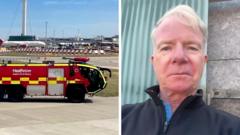
Edward Killiwick was aboard the British Airways mayday flight that transmitted a distress signal before safely touching down at London Heathrow Airport earlier this month. His firsthand account provides a chilling glimpse into the moments of uncertainty and fear experienced by those onboard during the emergency situation.
The Moment Fear Took Hold
Killiwick detailed the intense psychological impact of the British Airways mayday flight incident, describing how passengers reacted as crew members announced the emergency. According to his account, the atmosphere inside the cabin shifted dramatically from routine commercial flight operations to a state of heightened anxiety and concern.
"The announcement came suddenly," Killiwick explained, recounting how fellow travelers around him expressed their deepest fears. He noted that some passengers vocalized their distress, with cries of desperation echoing through the cabin as the reality of the situation became apparent. The emotional weight of potentially catastrophic circumstances created an environment of collective vulnerability among those aboard.
The Distress Call and Emergency Protocol
The British Airways mayday flight initiated its distress call following an onboard emergency that required immediate intervention from air traffic control. Aviation authorities quickly coordinated emergency response procedures, positioning rescue services at Heathrow in anticipation of the aircraft's arrival.
Mayday calls represent the most serious form of aviation distress communication, signaling an imminent threat to aircraft safety. The decision to issue such a call underscores the severity of the situation the flight crew determined was unfolding at that moment. Standard protocol requires air traffic control to prioritize mayday-declaring aircraft above all other traffic considerations.
Safe Landing at Heathrow
Despite the alarming nature of the emergency, the British Airways mayday flight crew successfully executed procedures to bring the aircraft safely to the ground at London's primary international airport. Emergency medical personnel and fire services stood ready on the tarmac, though their intervention ultimately proved unnecessary as the landing proceeded without incident.
Killiwick expressed relief and gratitude following the safe conclusion of the event, praising the professional demeanor exhibited by flight crew members throughout the ordeal. He noted that cabin staff maintained composure while communicating with passengers, providing reassurance during what remained an exceptionally tense period.
Passenger Reflections and Emotional Aftermath
The experience has left a lasting impression on Killiwick, who continues to process the emotional magnitude of events that unfolded during the British Airways mayday flight. He described the psychological toll of facing mortality, explaining how proximity to potential danger reshapes one's perspective on air travel and life circumstances generally.
Many passengers aboard shared similar sentiments, with the incident serving as a powerful reminder of aviation's inherent risks and the critical importance of rigorous safety protocols. Killiwick's willingness to share his account contributes to public understanding of emergency aviation procedures and human responses under extreme pressure.
Aviation Safety Standards and Response Coordination
The successful resolution of the British Airways mayday flight situation reflects decades of refined safety procedures and comprehensive training protocols within the commercial aviation industry. Flight crews undergo extensive preparation for emergency scenarios, ensuring they possess the knowledge and skills required to manage unexpected situations.
British Airways maintains rigorous maintenance and safety standards across its entire fleet, with aircraft undergoing regular inspections and technical evaluations. The airline's commitment to passenger safety represents a fundamental operational principle that guides all company decisions and procedures.
The Broader Context of Aviation Emergencies
While the British Airways mayday flight incident captured public attention, such emergencies remain statistically uncommon within modern commercial aviation. The industry's safety record continues to improve as technology advances and operational procedures become increasingly sophisticated.
Killiwick's testimony serves as a valuable documentation of human experience during aviation crises, offering insights into passenger psychology and emotional responses to extraordinary circumstances. His account underscores the psychological aspects of emergency situations that extend beyond mechanical or technical considerations.
The incident continues to generate discussion within aviation circles regarding communication protocols, passenger information procedures, and crisis management best practices. Industry professionals utilize such occurrences as learning opportunities to refine existing systems and implement enhanced safety measures.